T10 Dinerbot

The Delivery & Marketing Expert

A delivery robot that combines efficient delivery, comprehensive area perception, interactive features like movable head, voice, and expressions, and video/audio advertising. Dinerbot T10 can deliver food, assist waiters, and bring dirty dishes back to the kitchen.

The T10 Delivery Robot is built for seamless, intelligent service. With advanced AI navigation, it maneuvers through 59 cm spaces with ease. LiDAR sensors ensure safety, while its spacious tray, stable chassis, and user-friendly design enhance efficiency. A 23.8″ ad screen and custom branding add value. Smart charging keeps it running nonstop.
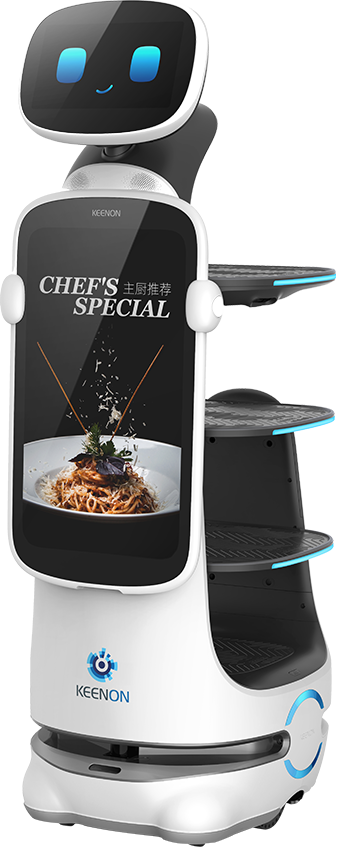
A smiling service robot with a screen displaying Chefs Special and a pasta dish. Equipped with compartments for carrying items, this Keenon-branded marvel integrates delivery technology to enhance hospitality settings efficiently.

Specifications

Specs

Dimensions (WxDxH): 555 x 486 x 1400 mm
Net Weight: 58kg (128lbs)
Max. Moving Speed: 1.0 metre/second
Slope Angle: 5°
Charging Time: 5.5 hours
Battery Life: Up to 8 hours
Total Load Capacity: 40kg (88lbs)
Minimum Passage Width: 59 cm

Optional Accessories / Software / Services

  • Additional Charging Station
  • E-BOX – to communicate with a lift/elevator
  • D-BOX – to communicate with an electronic door
  • Call Button (Pack of 5 pcs)
  • Floating Plate – to mitigate shocks
  • Transport Box – for transport of the robot
Battery Usage

Battery charging and operation times quoted in the specification are approximate and will vary depending on type of use. The internal batteries, as with any electronic device, can degrade over time after numerous recharging cycles and may eventually need to be replaced.

Set Up, Training & Support

Includes on-site setup and initial configuration of the robots at your premises, with operator training, so they are ready for use. (UK Mainland only – additional travel expenses apply elsewhere). All robots include a comprehensive User Manual for ongoing operation, and remote technical support.

Site Survey

Following quote acceptance and deposit payment, we will arrange a Site Survey for each of your premises. The Site Survey will note the overall premises layout, identify any width restrictions, obstacles, steps / ridges / slopes and distances and list the different rooms / tables / zones / areas of your premises for which the robots will be programmed. For those robot models which are capable of operating over multiple floors or through automated doors, we will check compatibility of your lift/elevator and door opening systems.

Lead time for robot configuration and delivery is typically 4-6 weeks. An Express Service is available for some models.

Package Contents

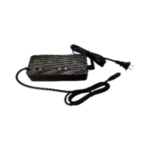
*The actual charger may be different.

Frequently Asked Questions

What are service robots used for in hospitality and catering?

Service robots in hospitality are autonomous machines designed to deliver food, transport items, clear tables and support front-of-house operations.

They navigate using sensors and mapping technology, moving safely through restaurants, hotels and event venues. Robots reduce manual workload while maintaining consistent service standards.

To implement successfully, businesses should assess peak trading pressures and identify repetitive tasks that can be automated without disrupting customer experience.

Yes, modern catering robots are built to operate safely in high-traffic hospitality environments.

They use obstacle detection, route planning and multi-layer shelving to transport meals, drinks or plates between kitchen and tables efficiently. This reduces waiting times and staff congestion.

To maximise efficiency, map service routes during installation and train staff to integrate robots into service workflows rather than treating them as standalone novelties.

Yes, service robots are widely used in hotels for room service delivery, housekeeping support and guest assistance.

They can transport towels, amenities and food orders directly to guest rooms, reducing staff workload and improving response times.

To ensure guest satisfaction, configure robots with secure lift integration and clear routing paths. This maintains discretion while improving operational efficiency.

Commercial cleaning robots use automated navigation and programmable routes to clean floors in large areas such as hotels, event venues and catering facilities.

They operate using sensors and mapping systems to avoid obstacles and cover designated zones systematically.

To achieve consistent results, schedule cleaning cycles during low-traffic periods and integrate robots into existing cleaning protocols rather than replacing staff entirely.

Yes, heavy-load service robots are designed to transport substantial weight safely across commercial premises.

They are commonly used for bulk dish returns, catering equipment movement or internal logistics within large venues.

To optimise performance, ensure floors are level and routes are clear of persistent obstructions. Correct mapping and weight distribution are essential for smooth operation.

No, service robots are designed to support staff rather than replace them.

They handle repetitive, time-consuming tasks such as food running or item transport, freeing team members to focus on customer interaction and service quality.

To achieve balance, position robots as operational assistants. Staff training and clear role definition ensure robots enhance rather than disrupt service culture.

Yes, modern service robots are equipped with advanced sensors and collision avoidance systems.

They detect obstacles, adjust routes and stop automatically if something enters their path.

To maintain safety standards, conduct proper commissioning and staff orientation. Clear operational guidelines ensure customers understand how robots move within the space.

Robots provide operational consistency during recruitment challenges or seasonal demand spikes.

They maintain service flow by handling transport and delivery tasks, reducing dependency on additional temporary staff.

To stabilise service levels, integrate robots into peak-time workflows such as event catering or high-occupancy hotel periods.

Yes, advanced service robots can integrate with EPOS or order systems to automate delivery workflows.

Orders can be routed directly to a robot for dispatch once prepared, improving speed and reducing human error.

To maximise automation, ensure your EPOS and network infrastructure are properly configured. Reliable Wi-Fi and secure connectivity are essential for seamless operation.

Yes, service robots can deliver measurable return on investment through labour efficiency, improved service speed and enhanced customer experience.

They are particularly valuable in high-footfall venues where repetitive tasks impact productivity.

To evaluate ROI, analyse labour allocation, peak trading bottlenecks and service delays. Implementing robots strategically ensures they address operational pain points rather than serving as a novelty feature.

Make an Enquiry

Fill out the form below, and we will be in touch shortly.